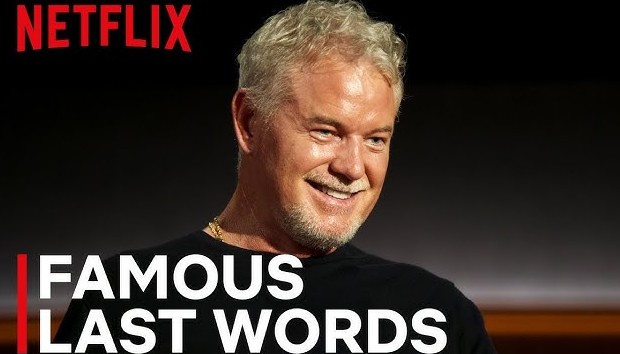
I recently watched Eric Dane’s documentary Eric Dane: Famous Last Words on Netflix, and it stayed with me longer than I expected.
There is something incredibly powerful about the idea of leaving words behind for your children. Something tangible. Something honest. A way for them to know who you really were beyond the roles you played for them.
A few years ago, John Stamos shared a photo of a handwritten letter from his mother and spoke about how she used to write to him. That idea stuck with me. Since then, I have written letters to my son. Sometimes on birthdays. Sometimes on holidays. Sometimes after moments I am proud of and sometimes after moments I am not. I write about who I am. About the love I have for him. About my struggles with OCD and anxiety. About my commitment to keep showing up and to keep trying to be a better mother for him.
Watching Eric Dane speak to his daughters felt like witnessing a living letter.
Brad Falchuk did such a thoughtful job interviewing him. He asked intentional questions. He listened. He allowed space. I especially loved how he brought the conversation full circle by referencing Eric describing himself earlier as a good tennis player. It was subtle, respectful, and felt like closure.
What surprised me most was how much I related to Eric.
Throughout the documentary, words like resilient, lonely, depressed, detached, funny, charming, reactive, and persevering were used to describe him. I saw empathy. I saw reflection. I saw someone who has wrestled deeply with pain and come to a quiet kind of peace.
Losing his father to suicide at seven years old changed the trajectory of his emotional life. Being told to stay strong and not show emotion in that moment likely rewired something in him. Children are not meant to hold grief alone. They are meant to fall apart and have someone steady them.
Despite his ALS diagnosis, I was struck by the absence of self pity. He does not rage against his fate in front of his children. He acknowledges sadness but does not burden them with guilt or expectation for the milestones he may miss. There is something deeply generous about that.
He speaks about showing up. Showing up for your children. Teaching them to show up for their friends. For the things they love. For their lives.
His four lessons stood out:
- Live in the present.
- Fall in love. Find passion, but do not let it define you.
- Choose friends wisely.
- Fight with honesty, integrity, and grace when faced with challenges.
When he ended the interview by speaking directly to his daughters and saying, “Goodnight. I love you,” I came undone. It felt like the purest form of a love letter.
Since becoming a mother, I have made it a priority to tell my son I love him every chance I get. Before bed (even if he is already asleep). At school drop off. In the middle of an ordinary afternoon. I tell him how lucky I am to be his mom. I never want him to grow up without hearing those words so consistently that they become part of his internal voice.
Because one day, that voice will matter.
The letters I write to my son talk about my perseverance. About living with OCD. About anxiety. About repairing when I lose my patience. About trying again. About showing up even when it feels hard.
I cannot control how long I will be here. None of us can. But I can control what I leave behind. Love. Words. Honesty. Effort.
If there is one thing I hope my son carries with him long after I am gone, it is not perfection. It is not performance. It is the certainty that he was deeply loved by a mother who showed up, who fought her own battles with honesty, and who told him every chance she got: I love you and goodnight.

 Messy Minded Momma
Leave a comment